Tuesday, April 24, 2012

Jill McDevitt's Feminique Boutique to celebrate four years in the borough

http://www.youtube.com/watch?v=TIZR7NF3UqA

The Femininque Boutique, West Chester’s controversial (and only!) “sex shop” is celebrating its fourth year anniversary on Saturday, May 5th, with an open house / birthday party. The store’s own, 25-year- old “sexpert” Jill McDevitt, promises the event to will fun and inspirational, right down to the day’s cupcake offerings: cream-filled penises and vulvas.

At 15, most girls are still nervous high-school freshmen, trying out for the cheerleading squad and awkwardly making out with their boyfriends at the Friday night football game. Not McDevitt, With the youthful exuberance of a 15-year-old young woman, she decided that she wanted to be nation’s foremost “sexpert.” While speaking at West Chester University recently, McDevitt pointed to a “how-to” sex column in a back-issue of Cosmopolitan as the source of inspiration for her aspired career. She declared that day, she would have her own sex advice column and she hoped to be the go-to experts that the editors at Condé Nast called for expert testimony whenever they needed a quote from a sexual advice columnist.

It didn’t take long for her goal to be realized. In her freshmen year at East Stroudsburg University, McDevitt was dishing out sex advice to a roomful of xco-eds when the editor of the campus paper walked by and caught drift of her conversation about “the double standards of male and female masturbation.” On the spot, she offered McDevitt a campus sex column in the university newspaper. It soon because the talk of campus – and not everyone was happy to read her open-minded opinions about sex, a theme that would repeat itself constantly over the next six or seven years.

A year later she decided to transfer to the University of Waterloo in Canada, because it was the only school in North America with an accredited B.A. degree program in “Sexuality, Marriage, and Family.” It took her just four years of college to achieve her dream of becoming a “sexpert.” Finding a job in her field, however, proved to be as daunting as finding a red-coated beaver on the hustling street of Montreal. McDevitt found herself in an unwelcoming and unrelenting job environment. With no job offers in hand, she decided to take out ads and pass out flyers marketing “in-home presentations” for bachelorette parties or “girl’s nights”, though McDevitt stressed her ability and willingness to to work with men, too.

No one was rushing to sign up for her lectures or bachelorette parties. She quickly recognized the need to establish a “headquarters”, a place she could sell products and begin to amass regular customers with a recognizable brand name. Just 18 weeks after graduation, at 21-years-old, McDevitt signed the lease on a storefront in downtown West Chester. Unfortunately, in the days that followed, she found herself in the center of a fire storm of controversy. Acquiring a retail permit for Feminique Boutique, as she aptly decided to name her store, was her first hurdle; the borough’s classification of her store as a “sex shop” made it considerably more difficult to ascertain.

After hiring an attorney, who pointed out the borough had no ordinance against a shop that sold sex toys and bedroom lingerie, she was granted a permit, much to collective chagrin of the clergy and parishioners at St. Agnes Roman Catholic church, just three blocks down the street of her shop. In fact, the church has refused to concede the permit issue and more than 100 members of the church crowded council’s chambers to protest the permit. In a letter to the editor at the time, a St. Agnes sister wrote “Jill McDevitt gains a Ph.D. in a field that brings suffering and heartache. The respect and reverence of our body and that of others fulfills God’s promise.”

McDevitt steadfastly maintains on her website that “free expression of one's sexuality is a vital part of being human, women are sexual subjects, not objects, and women have the right to access sexuality education and products in an environment that is sex-positive and female-friendly.” She had created a store that focused on female sexual empowerment, and describes her boutique as “categorically vanilla and PG-13.” Nevertheless, the media firestorm that soon ensued propelled McDevitt into the local, and briefly national, spotlight.

Despite the presence of hundreds of protestors gathered at borough council meetings, “the press was on my side.” When the story broke on the internet, it went viral and she received an outpouring of support from individuals all over the world in the form of blogs, people who signed petitions and donations to her legal fund. According to her own calculations, the air time and column inches she received in the local news gave her an estimated $35,000 worth of free publicity. Even as an inexperienced 21-year-old entrepreneur, McDevitt soon recognized the value of free marketing. She smartly decided to “milk her 15 minutes” for all it was worth. She recently published a book, "Fighting the Crusade Against Sex: Being Sex-Positive in a Sex-Negative World," and has five more in the works.

She writes a sex blog for Chester County’s Daily Local newspaper and has been featured in several Philadelphia weeklies. Most recently, Entertainment Weekly asked for her expert input on the recent success of the erotic novel 50 Shades of Grey and Philadelphia Magazine contacted her and will soon feature her in a personality profile, she said. She is also self-producing a short reality TV series that can be accessed through her website. Her next personal challenge is to teach a sex education workshop in all 50 states and as many international locations as possible.

She alleges that current public school sex education programs are “embarrassingly horrendous.” In fact, McDevitt recently volunteered in the Dominican Republic to teach high-risk children sexual safety and wrote about in an article for the WC Press. On her website, McDevitt describes herself as a sexologist, feminist sex shop owner, sex educator, public speaker, entertainer, blogger, author, and sexual rights advocate. She strives to create a “sex-positive” environment at the Feminique Boutique, where men and women do not feel ashamed to ask questions, and can explore their sexuality in a safe and comfortable setting.

To date, McDevitt has educated over 3,000 women and is currently pursuing her Ph.D. in Human Sexuality; upon completion she claims that she will be the only person in the world with all three of their degrees in “sex.” Feminique Boutique is located at 104 N. Church Street in West Chester, Pa. The store is open 11 a.m.-7 p.m., Monday through Saturday. McDevitt is available for sex education workshops, parties and in-home demonstrations. The 4th anniversary party of the opening of the shop is scheduled to begin at 11 a.m. on Saturday, May 5th. Mike Driscoll, a student in my Public Affairs Reporting class, contribued to this story.

Wednesday, March 21, 2012

Disarming Armageddon: Why Students Need to learn the linguistic and moral complexities of the Book of Revelation


Organized religion, in particular fundamentalist Christianity, has greatly impacted facets of American life in the last 30 years, from politics to civil rights to popular culture. We are in the midst of a raging firestorm, a culture war that threatens the very fabric of the nation. Yet, the genesis of our culture war, especially the most dubious questions of faith that it instigates, is rarely discussed in the American academy, except in institutions of higher learning that proudly bear a religious affiliation and that expect their students to shun attempts to discuss their religious views with people who disagree with them.

We have reached a point in the nation’s history when professors in higher education can no longer afford to pretend that religion is a purely personal, subjective belief. If universities are meant to prepare students to fully participate in society, then students need to be taught how to question and investigate everything, including their most personal religious beliefs, not just traditional academic subjects. American politics and religion are so interwoven these days, often in divisive ways, that one really cannot be studied without some consideration of the other. This is particularly important for students of history, political science, cultural studies and journalism.

Many people are afraid of talking about religion because it's such an emotional, subjective topic. And college professors (as well as high school teachers) are afraid of talking about religion in their classes because they fear students' parents will contact them, accusing them of trying to "indoctrinate" their children. In American society today, religion is where sex education was 30-40 years ago. Teen pregnancies, AIDS and STDs made sex education in schools a necessity. And now Koran-burning, the racial profiling of immigrants, and jihads against America have shown the need for universities to help students learn how to objectively examine the pros and cons of the impact of religion on society.

One boundary that needs to be overcome in college classrooms is the irrational fear of discussing matters of faith with college students. Too many college professors believe the separation of church and state extends into the classroom or that religious beliefs are too personal to discuss with students. They assume that matters of faith should be left to churches, because faith is based on matters that cannot be proven or subject to scientific inquiry. Why bother?

The very nature of academe – especially its recent embrace of tolerance for other cultures, creeds and customs -- does not provide an obvious rhetorical platform or institutional support for the questioning of religious ideology. Professors at public institutions seem to feel that study or discussion of religious ideology is not “academic” and should be the purview of religious schools or theological seminaries. This leaves a vast majority of students who attend public institutions unaware of and unprepared to understand one of the most onerous, and potentially dangerous, political movements of our time – the increasingly polarizing pull of Christian fundamentalists on American politics.

Ironically, as the fervent belief of fundamentalist Christian Americans grows that the return of Jesus Christ is immanent (and that America has a vital role to play in End Times eschatology), the nation is becoming torn asunder with a form of intolerance that universities claim to disown. For the past 18 years, I have been teaching a course at West Chester University in West Chester, Pennsylvania called “Literature of the Apocalypse.” Six or seven years ago, the composition faculty at West Chester asked me to teach the same material in a research-based writing class called “Writing About the Apocalypse.” The class has become a popular fixture among underclassmen at the university. I teach two sections of the class every year and they quickly reach the maximum enrollment of 25 students. (At least one of my students from West Chester is here today, at this lecture.) People in general find the Book of Revelation fascinating to discuss. But college students have more at stake in the end of the world than do professors. They have most of their lives yet to live. We don’t. They seek reassurance about their future. They wish to be reassured that the world they inhabit will not soon end. Taking just one (admittedly controversial) book of the Bible and examining its historical contexts, its influence on American politics and American culture and the hold it continues to possess on our collective imaginations, allows me to introduce a variety of interdisciplinary subjects that are frequently considered taboo in the classroom. It makes for a thought-provoking class, one that most students fully want to engage in.

Obviously, the world is an increasingly dangerous place in which to live. Nuclear armaments still threaten us with extinction; AIDS has not been cured and has ravaged Africa; the degradation of the planet continues at an unabated and frightening pace, despite scientific evidence that suggests we ought to be better stewards of the planet; starvation and over-population become ever more endemic with every passing month; hurricanes, tsunamis and earthquakes become increasingly devastating and deadly. In short, it is troublesome to try to debunk St. John’s Revelation at a time when so many of its predictions become increasingly plausible. Therein lies the fascinating pull of the subject matter and the relevance of the course for college students. By a happy circumstance, Revelation is designed to make students think about the implications of the end of the world and their own mortality, even as it tries to persuade them that the world’s end will transpire according to a biblical blueprint that grips the imagination of evangelical Christians. My two classes, which utilize Revelation as a starting point to discuss the nation’s culture war and then to introduce students to the issues mentioned above, try to place the Book of Revelation in its historical context and foster a hope that humankind has a responsibility to search for ways to keep the end from happening. “Debunking the Apocalypse” might be a better phrase to describe the arc of the two courses.

My discussion today will focus on the roots of the class, how the Book of Revelation can be discussed in a historical context that makes it less threatening to modern-day students, and the political and social impact that American religious fundamentalists have on American political and cultural life.

Because belief in a literal interpretation of the Book of Revelation among fundamentalist Christians has become a driving force in American culture and a crucial component of the culture wars, it is my position that public institutions of higher learning have a responsibility to help student-citizens understand the underlying dangers of a literal interpretation of a biblical End Times. Professors of rhetoric and literature at such institutions could be helping students think about solutions for preserving the planet, instead of ceding a calamitous ending to religious fundamentalist believers. Chris Hedges, one of the nation’s preeminent chroniclers about the nexus of religion and politics in America, mentions the prominence of Revelation in his book American Fascists: The Christian Right and the War on America:

The Book of Revelation, a crucial text for the radical Christian Right, appears to show Christ returning to earth at the head of an avenging army. It is one of the few places in the Bible where Christ is associated with violence. This bizarre book, omitted from some of the early canons and relegated to the back of the Bible by Martin Luther, may have been a way, as scholars contend, for early Christians to cope with Roman persecution and their dreams of final triumph and glory. The book, however, paints a picture of a bloody battle between the forces of good and evil, Christ and the Antichrist, God and Satan, and the torment and utter destruction of all who do not follow the faith. In this vision, only the faithful will be allowed to enter the gates of the New Jerusalem. All others will disappear, cast into the lake of fire. The Warrior’s defeat of the armies of the nations, a vast apocalyptic vision of war… It is a story of God’s ruthless, terrifying and violent power unleashed on non-believers. (Hedges, pgs. 4-5)

It is important for students to understand why Revelation was meant to give first century Christians hope. Scholars believe Revelation was written around 90 A.D., some sixty years after the crucifixion and death of Jesus Christ. His earliest disciples were told, and believed, Christ would return within their lifetimes. When St. John’s Revelation was handed to them, it was meant to help them cope with the persecution of their own lives; they were being crucified and fed to lions in the Roman Coliseum around this time. The Jerusalem Bible explains,

It must be understood first and foremost as a tract for the times, written to increase hope and determination of the church on earth in a period of disturbance and bitter persecution, and prophesying the certain downfall and destruction of the Roman imperial power. The imagery, largely drawn from the Old Testament, especially Daniel, allows the author to allude to the enemy, Rome, under the guise of an old enemy, Babylon; and to present the happenings of his own day, seen by their reflections in the heavens, as recapitulations or fulfillments of the great events of Israel’s past. (Jerusalem Bible, p. 320)

John wrote Revelation as an open letter of revolt and sedition. It was designed to give hope to people in crisis. But he couched his call for political insurrection in mysterious and symbolic terms to protect those who carried it. To bear such a letter on your person, calling for the overthrow of a sitting government, was a certain death sentence if it was discovered by one of the emperor’s centurions. John’s inner circle knew that “Babylon” was coded language for Rome. Hiding the true meaning of the letter was essential to the safe passage of those who possessed it. All of Revelation is rife with such purposefully opaque meanings, meant to be understood only by the community of believers. The Greek word for Revelation (apocalypse), means “lifting of the veil.”

The hidden meaning of Revelation, its reliance on violence and symbolism to imbue its meaning, is inherently problematic for Christian believers who are told all their lives of the infallibility of the Bible. Because it is God’s word, and must be believed without question, it is “logical” for fundamentalist believers to “know” John’s template for the second coming is bound to happen, just as it is described in the pages of Revelation. To try to suggest that Revelation was not meant to be taken literally, or to try to place it into its natural historical context, calls the Bible’s infallibility into question. Naturally, this would seem not only offensive but heretical to many fundamentalist Christians.

The tension between rational thinking, scientific thought and reasoning, the weighing of evidence in argument to produce consensus, is understandably but irrevocably at odds with the way religious fundamentalists approach their core beliefs. Academics frequently wrestle with the foundations of this intellectual dichotomy. At least I do. I want to believe in God and an afterlife, but I want my belief in a higher power to be based on credible evidence. Most of the evidence of the existence of God and the Resurrection and Second Coming of the Savior from my childhood as an altar boy in the Roman Catholic church fell far short of the intellectual rigors of science that explained the existence of things I could not see but trusted were there, oxygen for instance. I was told to believe without questioning the essential core truths of my faith. Yet I was trained in college as a student of journalism to question everything, especially the things that could not be proven by scientific methodology or persuasive rhetorical argument. Many professors manage to hold onto a strong religious faith despite the very obvious paradoxes that orthodox belief brings with it. But few of them find time to discuss these essential questions of their own lives with their students. They may fear the judgment of their peers for expressing a faith; they may fear there is no room in the curriculum to discuss religious questions in pedagogically narrow classes that focus on biology or economics or mathematics. They may fear that expressing religious belief will alienate some students. Or, conversely, they may fear the judgment of fundamentalist students if they question the rationality of religious belief. Despite all of these fears, it has been my experience that college-level students yearn to discuss questions about religious faith; that discussions about the development of a person’s moral core are an essential part of the educational process; and that college is the perfect time for discussion about such personal issues to take place.

In the past 10 years or so, the nexus between religion and politics has been a fertile field for writers and scholars who have warned of the rising political power of the Christian right and of the right’s thirst to hold onto the reins of power and its attempt to impose what it purports to be “Christian values” on the rest of America. It should come as no big surprise that a strong national defense (justified, in part, by the political right’s assertion of the infallibility of the Bible and Revelation’s portrayal of Jesus as an avenging warrior king) is part of their political agenda. They seek to prepare America not just for the return of the savior but to play a pivotal role in the last world war, known as “Armageddon” in the Bible, the last battle between the forces of Jesus and the forces of Satan. To a great extent, the core religious belief among American fundamentalists that the nation of Israel is the pre-determined place where Jesus will reveal his return to earth is largely responsible for America’s financial support of Israel. The formation of the nation of Israel was regarded among fundamentalists as one of the essential Biblical “signs” that the return of the Savior was imminent. Chris Hedges, Christopher Hitchens, Kevin Phillips, Michelle Goldberg and Barbara Rossing are among the few writers who have published important books warning of the increasing influence of a strident brand of Christianity and the overt connection between this strident brand of religion and the Republican party. Phillips notes that:

Between 1960 and 2000, the membership of the evangelical Southern Baptist Convention jumped from 10 million to 17 million, while the Pentecostal churches soared from under 2 million to almost 12 million. Mormons and Seventh Day Adventists likewise gained. On the more sedate side of the ledger, the mainstream Episcopalians dropped from 3.5 million to 2 million and the United Methodists slumped from 10 million to under 8 million. The meaning of these changes deepened when one compared the religious intensity, ideology and party preference of the different clergies. Strict fundamentalist-type churches gained; doctrinally loose mainline churches…shrank. The allegro movement of this realignment was swelling in the mid- to late 1980s, precisely when a born-again George W. Bush walked onto the national political stage. Liberal religion was being routed. Surveys taken for the 1988 election captured the extraordinary theological and public policy divisions between the clergy of the Pentecostal Assemblies of God and the Southern Baptists and the mainline (then still unmerged) Presbyterians. Political party preference mirrored the ideological chasm. On the theological right, 97 percent of the Assemblies of God clergy and 88 percent of the Southern Baptist Convention preachers agreed that Jesus was the only way to salvation; 95 percent of the AOB and 79 percent of the SBC clergy insisted the devil actually existed; 83 percent of the AOG and 54 percent of the SBC shepherds expressed belief in the church’s “rapture.” Conversely, among the Presbyterian clergy – mainline Episcopalians and Congregationalists would not have been too different – only 30 percent identified Jesus as the only way to salvation, just 18 percent believed in the devil and a tiny 5 percent expected the rapture. Abortion, pornography and gay rights topped the concerns of the Pentecostal clergy. Presbyterian ministers, by contrast, prioritized hunger and poverty, civil rights and the environment. (Phillips, p. 216-217)

One of the core beliefs of fundamentalist Christians is that public education is too secular, and that since the Supreme Court banned prayer in public schools, public education has fallen into the hands of secular humanists. According to an article in USA Today, (“Home Schooling Grows,” Janice Lloyd, Jan. 5, 2007), the home school movement has climbed steadily over the last 10 years. “The number of home-schooled kids hit 1.5 million in 2007, up 74 percent from when the Department of National Center for Educational Statistics started keeping track in 1999 and up 36 percent since 2003…. 'There’s no reason to believe it would not keep going,’ says Gail Mulligan, a statistician at the center. Traditionally the biggest motivations for parents to teach their children at home have been moral or religious reasons and that remains the top pick when parents are asked toexplain their choice.”

In Kingdom Coming: the Rise of Christian Nationalism, Michelle Goldberg notes that the influence of home schooled children is already having an effect in political offices in the nation’s capital. “The influence of these kids, trained from infancy to be Christian culture warriors, is already making itself felt. Patrick Henry College, located in rural Virginia, caters specifically to homeschooled evangelical students. It has existed since 2000 and accepts fewer than one hundred students a year, yet in 2004’s spring semester it provided 7 percent of the White House’s interns. Twenty-two conservative congressmen have employed one or more Patrick Henry interns” (Goldberg, pgs. 2-3). Michael P. Farris, notes Goldberg, refers to these (home schooling) parents as the Moses generation, because they have successfully led their children out of the bondage of godless public schools. But permanent exile from the American mainstream was never their principle goal. As Farris wrote in his book Generation Joshua, the home-schooling movement “will succeed when our children, the Joshua Generation, engage wholeheartedly in the battle to take the land.” Goldberg explains,

Like America’s past Great Awakenings, the Christian nationalist movement claims that the Bible is absolutely and literally true. But it goes much further, extrapolating a total political program from that truth, and yoking that program to a political party. It is a conflation of scripture and politics that sees America’s triumphs as confirmation of the truth of the Christian religion, and America’s struggles as part of a cosmic contest between God and the devil. It claims supernatural sanction for its campaign of national renewal and speaks rapturously about vanquishing the millions of Americans who would stand in its way. The motivating dream of the movement is the restoration of an imagined Christian nation. With a revisionist history that claims the founders never intended to create a secular country and that separation of church and state is a lie fostered by conniving leftists, Christian nationalism rejects the idea of government neutrality. The movement argues that the absence of religion in public is itself a religion – the malign faith of secular humanism – that must, in the interest of fairness, be balanced with equal deference to the Bible. (Goldberg pgs. 6-7)

At the risk of alienating conservative parents, American schools (especially institutions of higher learning) need to begin to educate American students about the rise of this dangerous threat to the traditional values of the nation: the long-held beliefs of the founders that church and state should be separate; that freedom of worship is one of the most revered rights of the people; and that no brand of religion should enjoy favor over another.

The most dangerously radical idea of all is that the inherently pacifist philosophy of Jesus Christ, as he espoused in the Sermon on the Mount, can somehow be negated and turned inside out by the Warrior Christ as presented in St. John’s fever dream in the Book of Revelation. The Warrior Jesus gives religious fundamentalists a way out of the hard work of peace; it justifies warfare and it establishes the idea that Jesus himself would engage in bloodshed of massive proportions for the sake of vanquishing “enemies” who disagree with him. The paradigm shift that the Book of Revelation represents is so far removed from the life and sayings of Jesus during his time on Earth that its removal from the Bible has long been debated at the highest levels of the church.

Perhaps no modern writer has defined the potential politically propagandistic dangers of Revelation and its powers of persuasion more acutely than Chris Hedges, the son of a Presbyterian minister (and a former New York Times reporter) who attended the Harvard Divinity School himself with the intention of becoming a preacher. In American Fascists: The Christian Right and the War on America, Hedges notes that Revelation, “a crucial text for the radical Christian right,” shows Christ’s return to earth at the head of an avenging army and notes this is one of the few places in the Bible where Christ is associated with violence. Says Hedges,


There is enough hatred, bigotry and lust for violence in the pages of the Bible to satisfy anyone bent on justifying cruelty and violence….and the Bible has long been used in the wrong hands – such as antebellum slave owners in the American South who quoted from it to defend slavery – not to Christianize the culture, as those wielding it often claim, but to acculturate the Christian faith. …Christians often fail to acknowledge that there are hateful passages in the Bible that give sacred authority to the rage, self-aggrandizement and intolerance of the Christian Right. Church leaders must denounce the biblical passages that champion apocalyptic violence and hateful political creeds. They must do so in the light of other biblical passages that teach a compassion and tolerance, often exemplified by the life of Christ, which stands opposed to bigotry and violence. Until this happens, until the Christian churches wade into the debate, these biblical passages will be used by bigots and despots to give sacred authority to their calls to subjugate or eradicate the enemies of God. This literature in the biblical canon keeps alive the virus of hatred, whether dormant or active, and the possibility of apocalyptic terror in the name of God.
(Hedges, p. 6)

There has been no on-going debate about the latent violence in the Book of Revelation in American churches. Attendance is booming in Pentecostal, evangelical and fundamentalist churches that preach a literal interpretation of Revelation. Attendance is declining in moderate American churches that ignore the violent trappings of Revelation or downplay its usefulness as a map for the End Times. Pastors at such churches may fear that de-emphasizing this dangerous last book of the Bible will only further alienate believers.

Now seems like an appropriate time for America’s institutions of higher learning to take up the issue. The connections between the nation’s religious beliefs and its developing culture have never been more important, or more ominous, than they now are. To avoid discussing these important political and cultural issues with students who are curious and concerned about the nation’s future is not only short-sighted but threatens the health and welfare of all inhabitants of our planet. I can think of almost nothing in the Western canon as important to professors of literature, religious and cultural studies, history, political science, composition and rhetoric as the potential extinction of mankind that a religious World War III would most certainly bring to fruition.

If academics don’t soon learn to disarm Armageddon in the classroom, and tear up the template for the End Times that is the Book of Revelation, we risk losing everything in life we hold dear, for human extinction is a form of eternity too. Despite what passionate believers tell us, rational people must always believe it is too big a risk to expect Jesus to rescue us from our own foolishness.


Works Cited

Farris, Michael. Generation Joshua: Restoring the Heritage of Christian Leadership. Nashville: B & H Publishing Group, 2005.

Goldberg, Michelle. Kingdom Coming: The Rise of Christian Nationalism. New York: W.W. Norton, 2006.

Hedges, Chris. American Fascists: The Christian Right and the War on America. New York: The Free Press, 2006.

Lloyd, Janice. “Home School Grows.” USA Today, January 5, 2007.

Phillips, Kevin. American Dynasty: Aristocracy, Fortune and the Politics of Deceit in the House of Bush. New York: Viking Publishers, 2004.

The Jerusalem Bible. New York: Doubleday and Co. Inc., 1966.

Tuesday, February 7, 2012

APSCUF responds to Gov. Corbett's proposed cuts to higher education


A crowd of protestors conveyed their disapproval to Gov. Corbett's proposed budget cuts to the state system of higher education in Harrisburg.


In his 2012-13 budget address today, Gov. Tom Corbett announced his plan to slash funding yet again for Pennsylvania’s 14 state-owned universities, with cuts totaling another $82.5 million for the next academic year. This comes on the heels of the current year’s cuts and budget freeze adding up to more than $112 million in lost state funding for 2011-12. All told, the governor’s proposed budget would mean a total loss of nearly $175 million in state funding since he came into office.

These cuts would set back the Pennsylvania State System of Higher Education to funding levels not seen since 1989-90. That’s right — Corbett is trying to send our universities back to the 1980s. Just for fun, try to remember where you were in 1989… For reference’s sake, it was the year of the Tiananmen Square uprising and the Berlin Wall coming down. The Billboard Hot 100 Song of the Year was “Look Away” by Chicago. “Saved by the Bell” was in its first season.

Here is APSCUF’s official statement:

GOVERNOR CORBETT’S BUDGET CUTS TO PUBLIC HIGHER EDUCATION JEOPARDIZE PENNSYLVANIA’S FUTURE
Funding for state-owned universities is necessary to ensure that Pennsylvania students have the opportunity to go to college.

HARRISBURG – Today Governor Tom Corbett revealed his FY 2012-13 state budget proposal, which cuts funding for Pennsylvania’s 14 state-owned universities by 20 percent, or $82.5 million. The president of the association representing 6,000 faculty members and coaches at the State System of Higher Education (PASSHE) institutions expressed dismay that the governor has once again attempted to balance the budget on the backs of students and their working families.

The governor’s proposed budget allocates $330 million to PASSHE, a loss of almost $175 million since Corbett took office. His budget proposal comes just one month after he requested that the State System freeze five percent of last year’s appropriation.

“Since taking office, Governor Corbett has taken every opportunity to decrease funding for our universities,” said Dr. Steve Hicks, president of APSCUF. “We understand that these are challenging economic times, but our students and their families are already struggling to make ends meet. Additional budget cuts are going to put the college dream out of reach for many Pennsylvanians.”

In June, Governor Corbett signed a budget that reduced funding for PASSHE by 18 percent.

As a result, PASSHE was forced to raise tuition 7.5 percent.

“PASSHE has a state-mandated mission to provide accessible, affordable, ‘high quality education at the lowest possible cost to students.’ Our universities cannot continue to meet these goals without critical state support,” Dr. Hicks stated. “The governor’s proposal puts current funding for the State System below 1989-90 levels. This short-sighted budget fix will have a lasting impact on the future of the Commonwealth.”

“Our campus communities must stand together for quality education,” Hicks said. “I urge the legislature to reaffirm the promise of affordable higher education for the working families of Pennsylvania.”

The governor’s budget proposal includes cuts to higher education totaling $265.4 million. In addition to the State System reduction, three of the four state-related universities will see cuts totaling $146.9 million, community colleges, $8.8 million, and the Pennsylvania Higher Education Assistance Agency, $27.2 million.
So it looks like its déjà vu all over again. We intend to fight these proposed cuts, just as we did last year, but we once again need your help. Here’s what you can do:


1. Share this post with your friends and colleagues, either by forwarding via email or sharing on social media (you can use the buttons at the bottom of this post). We need to get the word out as quickly as possible to as many members, students and alumni as possible.

2. Encourage your students to get involved in the following ways:

Liking the PA Students Voice Facebook page at www.facebook.com/pastudentsvoice, or
Following the PA Students Voice Twitter feed at www.twitter.com/pastudentsvoice.
3. Register for our budget mobilization webinar, which will be held next Wednesday at 2 p.m. The APSCUF government relations team will be sharing our strategy to combat the governor’s plan and talking about best practices in reaching out to legislators. It’s limited to the first 100 registrants, so hurry and sign up today!

4. Sign up to participate in the APSCUF Lobby Day events on March 26 and 27. On Monday evening, we will have a reception in Harrisburg at Ceoltas Irish Pub from 5:30 to 8:30 p.m. On Tuesday, we will be meeting with elected officials at the state Capitol. Please fill out the following form by March 9 if you plan to attend APSCUF Lobby Day in Harrisburg.

Saturday, January 28, 2012

Charlie Bear arrives


Since driving out to Wisconsin with my brother Matt the Tuesday before Thanksgiving, I haven't had much to say on my blog. The purpose of our visit was to go visit my mother, Agnes, whose condition with Alzheimer's disease was deteriorating.

The thought of losing my mother, so soon after the passing of my father, has made it hard to face the keyboard. I really haven't wanted to write much. If you've lost a parent, you probably know what I mean.

My mother's doctors in Wisconsin told my sister Heidi, who lives in Neenah, close to the facility where my mother resides, that a series of small strokes had set her health back. More importantly, they seemed to suggest a larger stroke that could suddenly end her life was on the horizon. My siblings were advised that if we wanted to come and say our goodbyes to her, it was prudent to do so sooner than later.

I had been planning on making the long drive to Wisconsin over my semester break. But Matt and I decided not wait. It was a bittersweet trip. We passed through a howling midwestern rainstorm that lasted close to eight hours. Then, just as it was clearing, we managed to hit Chicago right at the 5 p.m. rush hour. It took us nearly three hours to drive out of the city. The task itself was depressing enough. But when the weather and traffic turned a 15-hour drive into something closer to 20, we both wondered why we'd made the effort.

I had spoken to my mother on the telephone about once a week before our trip at Thanksgiving. With each successive call, I seemed to slip farther and farther away from her mind. With some prompting, she eventually could be made to remember I was her oldest son, Chuck, who lived back in Pennsylvania. But talking to her in the present was like trying to talk to someone through a closed door who was still half-asleep, dreaming.

While I was with her in Wisconsin, I mostly sat and held her hand or scratched her scalp, which she loved. I suspect that was something my father must have done for her over the last five years as she started slipping away from us. It occurred to all of my siblings, after my father was stricken with lymphoma in June, just how nurturing and renewing his attentive care for her had been over the past few years of their marriage.

Thanksgiving itself was a glorious meal attended by six of my siblings, including my sister Gretchen who drove from Colorado for the occasion with six of her seven children. My mom was not able to engage in the table's lively conversation, and it was hard not to note that it was the first Thanksgiving in 60 years she did not share the holiday meal with her husband.

When it came time to say goodbye to her, at 6 a.m. on the Friday after Thanksgiving, I stole into her bedroom and kissed her goodbye, uncertain whether I would ever see her again. She was awake, as was my sister, Marianna, who shared the bed with her to comfort her and reassure her if she woke up in the middle of the night.

My mother was awake and she smiled up at me when I kissed her forehead. "Goodbye, Mom," I told her. "Matt and I are leaving now. You are a great mother, the best in the whole world! I love you!"

She suffered my embrace and said to me, "I know" and then laughed. Then Matt said his farewells and we were soon on the road again, this time in much better driving conditions.

In the two months since then, my mother's health has improved significantly. The large stroke we feared never came. Several of my sisters have been out to visit with her. I hope to go back in the spring, when my semester has ended.

But in the meantime, my sister Trudy had an idea that seemed divinely inspired. Taking some of my dad's old flannel shirts, she knitted a teddy bear for her and stuffed it with all of her love and the scent of my dad. She pinned a picture of my father to the bear and stitched a small, red heart on the bear's foot with a personal message: "I love Ag" it reads.

My siblings have spend the last week or so coming up with names for the bear..... and trying to help Trudy think of a name for her new "business." We decided she could make a living stitching these family mementos out of the clothing of departed loved ones. The best suggestion any of us came up with was "Remem-bear" but, alas, Trudy's early research revealed some enterprising soul had already marketed that name with the same sweet intentions: making teddy bears out of the used clothing of people who have passed on.

Trudy's "Charlie Bear" package arrived yesterday. Heidi smartly took her camera with her to document its arrival. This was her report to the rest of us:

The wonderful bear that Trudy made for Mom out of one of Dad’s shirts arrived and I brought it to Mom this afternoon.

It was a HUGE HIT!!!!!

She immediately tucked him into the crook of her arm like a baby, patted his little bottom and snuggled him in right away. Mom wouldn’t put him down and was thrilled with each detail like the “I love Ag” embroidered on his foot, the picture of Dad hanging from the ribbon around his neck and the little button eyes! She keeps kissing his cute black nose and kissing his adorable face.

When I read the note that Trudy sent with it, Brandy (one of the aids) started to cry. She wants one for her Grandmother. Howie called the bear “Nifty” and later at dinner Mom was looking at the photo of Dad and she said “He sure is a good looking guy.”

Mom came home with me for a sleepover and she insisted on bringing Charlie Bear with her. She held him all through dinner – which she ate 100% independently even while holding on to him – and all through the movie we watched afterwards. Right now she’s sleeping peacefully, snuggling in to her new best pal.


The best parts of our lives are comprised of such simple thoughts and gifts as my sister made for my mother.

We are all so blessed to be part of this family, the family of man.


Me and Mom, at Heidi's house in Neenah, WI, the day before Thanksgiving.

Tuesday, November 29, 2011

The Year in Recorded Music

The Best of 2011The year provided so many great discs that caught my attention that I’ve expanded my list to twenty. If you’re reading this in a seasonal card and want a more fuller explanation of discs 11 through 20, shoot me an email and I will send you my blog link. Many of the bands on the top half of this list I saw live and most of them were outstanding, but especially Gillian Welch (see at the new Union Transfer venue in mid-October) and Dawes, seen at the TLA in Philly one week later.


1. The Harrow and the Harvest, Gillian Welch (Acony). A harrowing, haunting meditation that explores America’s darkest corners with heartbreaking observations and savvy commentary. Welch’s first studio recording in eight years is a masterpiece. The intricate, delicate, and ethereal interplay between Welch and her partner, David Rawlings, was breathtaking to witness first hand. Welch’s plaintive vocals, interlocked with Rawling’s subtle harmonies and guitar picking, belies the terror of their best tunes. Each song is a journey worth taking and savoring but “The Way It Is,” “Dark Turn of Mind” and “Six White Horses” seem timeless.


2. Nothing is Wrong. Dawes (ATO). The most joyous rock ‘n’ roll record of the year, performed by a band that exudes confidence and is primed to explode. Their show in October was unapologetically fun. The DNA for their music can be found in the music of Bob Dylan and the Band and Jackson Browne. A slow simmering brew of guitars, organ, piano and drums. Taylor Goldsmith’s tasty guitar licks are homages to Browne’s longtime guitarist David Lindley. His vocals performance skew a tad too close to Jackson’s plaintive yearnings for some listeners, but I find them compelling. “Fire Away” burns with passion. “Time Spent in Los Angeles” (despite a tortured rhyme) got more air play. Goldmith’s collaboration with John McCauley and Matt Vasquez (Middle Brother) will delight fans of this Dawes recording and is list-worthy.


3. Tassili. Tinariwen (Anti). An intoxicating brew of acoustic guitars, hand claps and percussion that shares the same simmering sonic palette of fellow African Ali Farka Toure. The musicians in Tinariwen hail from the southern Sahara region of the continent and perform live in nomadic gowns and headdresses. Tassili is named for the part of the Algerian desert where the musicians recorded the music. The band’s name means “empty places” and that serves as an apt similie for the relaxing vibe this music creates. “Tishoumaren” (music of the unemployed) addresses issues of political repression and awakening, and demands of sovereignty. Ibhahim Ag Alhabib, the band’s primary songwriter, sings with an earthy, soulful earnestness that adds an ageless bluesy feeling to the record.


4. Burst Apart. The Antlers (Frenchkiss). Ambient, trippy, blissful pop music. This Brooklyn band makes music that bears repeated listening and will take you to another place. If you like trip-hop music in mold of Portishead and Radiohead, you’ll find the Antlers equally appealing. Pete Silberman’s choir boy warble brings an epic, orchestral sensibility to the music of Burst Apart. Darby Cicci brings seamless support on synthesizers, electronic piano and trumpet. An irresistible truffle of an album, “I Don’t Want Love” and “Putting the Dog to Sleep”, the album’s opening and closing cuts, stand out as the best tracks on an album full of them.


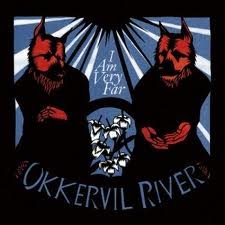
5. I Am Very Far. Okkervil River (Jagjaguwar). Will Sheff was given a big budget for this effort and the money was well spent. He expanded the sonic palette of his previous folk-rock albums by adding cellos, violas, violins and a raft full of brass instruments you'd find in a middle school band room. His experiments don't always work, and the album feels slightly off kilter at times, but Sheff's lyrics are always worth hearing. His eye for details remains sharp and his vision unrelenting. His best songs have always plowed a bloodstained field to find their inspiration. This album is as dark as ever, a stark warning of the approaching Apocalyse. The violence is less personal this time around, but the social warning it evokes is no less powerful or thought-provoking. “Rider” was my favorite song of the year but it’s all worth hearing and thinking about.


6. Yuck. Yuck (Fat Possum). Big meaty hooks. Bouncy melodies mixed with searing feedback distortion amid crunchy guitar riffs. This is a princely mix of power pop and punk, served up in a concoction that recalls the halcyon days of Dinosaur Jr. It grabs you by the throat and won’t stop shaking it. Will make you wish you were young enough to head to your nearest mosh pit. Think Kinks in their head banging swinging London days and you’ll get the idea. (London is their hometown) Find “The Wall” or “Get Away” on YouTube and prepare to have your world rocked.


7. The King is Dead. The Decemberists (Capitol). Colin Meloy’s swansong with the Decemberists is his most radio-friendly collection of tunes and, not too surprisingly, it has sold more than any of his earlier, more acerbic, albums and made the band more popular than ever. I caught two of their shows this year, one in Philly at the Academy of Music and a second show at the Ryman Auditorium in Nashville. Both shows relied heavily on the string of hits here: “Don’t Carry It All,” “Calamity Song,” Down By the Water” and “This Is Why We Fight” are among the catchiest tunes Meloy has ever penned. A great folk rock album in the tradition of Fairport Convention and Pentangle.


8. Whokill. Tuneyards. (4AD). Merrill Garbus has such an unforgettable, distinctive voice that this quirky debut stood out as one of the year’s most captivating records. Channeling the Afro-pop vibe of Fela Kuti, Garbus uses her voice more as an additional instrument than as a source of personal angst or political commentary, both of which find a way into her message. Garbus uses drum and vocal loops to create a mesmerizing mixture of wails and beats. When I caught her show this year at Philly’s new concert venue, the Union Transfer, the trickery wore thin on me after about an hour. But my son and youngest daughter (big fans of the band) were all in. “Bizness” is the song to hear if you want to sample this exotic dish.


9. Helplessness Blues. Fleet Foxes (Sub Pop). It took a while to warm up to the Fleet Foxes sophomore effort. To my ears, there was no stand-out single that was appealing as “White Winter Hymnal” on their eponymous first album. But as the year went on, I kept returning to this record and each time I was rewarded with something that stuck with me and sounded fresh. The band’s harmonies, their hallmark, are as soaring and inspirational as ever. Writer and lead singer Robin Pecknold’s arrangements build from creeping, slow crescendos into sweeping orchestral moments of sheer sonic bliss. Besides, the Welch disc, this was the best folk CD I heard all year, in a year that was loaded with folk diamonds. The title track, "Bedouin Dress” and “Lorelei” stand out.


10. Bad As Me. Tom Waits (Anti). Tom’s first studio album since 2004 was worth the Wait. It’s his best collection of original material since 1992’s “Bone Machine,” but far less experimental and weirdly dissonant than that collection. Waits is channeling his inner blues muse on this album and the songs are far more focused (and shorter) than he tends to churn out. Never a great singer, his raspy voice still sounds as if he’s been smoking charcoal and drinking refrigerant. But this time the songs are jubilant and danceable and Waits is in full-tilt boogie party mode. “Get Lost” and the closer, “New Years Eve” are highlights.

The albums that came close to making my list, in alphabetical order:
Chief, Eric Church (EMI); Cannibal Courtship, Dengue Fever, Concord); Small Craft On a Milk Sea, Brian Eno (Opal) Speed of Darkness, Flogging Molly (Borstal Beat); Eye Contact, Gang Gang Dance (4AD); Ancient & Modern, the Mekons, (Sin); Reverie, Joe Henry (Anti) Middle Brother, Middle Brother (Partisan); Kiss Each Other Clean, Iron & Wine (Warners). Soul Time, Sharon Jones and the Dap Kings (Daptone); Smart Flesh, the Low Anthem; Dakar-Kingston, Youssou Ndour (Decca); So Beautiful or So What, Paul Simon (Concord); Wild Flag, Wild Flag (Merge).

The top 20 songs of the year: 1) “Rider”, Okkervil River; 2) “Calamity Song,” The Decemberists; 3) “Bizness,” Tuneyards; 4) “Don’t Owe You a Thang,” Gary Clark Jr., 5) “Fire Away,” Dawes; 6) “Dark Turn of Mind,” Gillian Welch; 7) “The Wall,” Yuck; 8) “Portland” Middle Brother; 9) “Don’t Shut ‘em Down,” Flogging Molly; 10) “Space In Your Race”, the Mekons; 11) “Glass Jar,” Gang Gang Dance; 12) “Putting the Dog to Sleep,” the Antlers; 13) “Homeboy,” Eric Church; 14) “You Were Never There,” Diego Garcia; 15) “Get Lost,” Tom Waits; 16) “Barton Hollow,” The Civil Wars; 18) “The Afterlife,” Paul Simon; 19) “Bedouin Dress,” The Fleet Foxes; 20) “Change the Sheets”, Kathleen Edwards.

Thursday, November 10, 2011

The complicity of silence: Why Paterno had to go


When giant sequoias fall, the sound drowns out everything in the forest for what seems like days. Whether anyone is there to hear it, the forest knows the sound and it collectively shudders in anticipation.

It hears the rending of ancient roots from the ground; the tumultuous snapping of branches and limbs torn asunder; the swooshing of thousands of leaves in a death spiral that sucks the very soul out of the air itself. Finally comes the thunderous cacophony of the battered trunk, pummeling the Earth with one last vicious cry of anguish.

So to, does it seem, when human legends fall. Perhaps none have ever landed so ingloriously or so awfully as Joe Paterno. The last few days have been excruciating to witness. We knew the ground was weak and the roots decayed. But when the crash came, it was still hard to watch. We wanted to hold our ears.

I bleed blue. I am a Penn State alum who felt honored to have a degree from the university and who choose to go to graduate school because of the presence of Coach Paterno. My grades in high school were not good enough for me to consider applying to Penn State. But after I had secured my undergraduate degree at a small liberal arts university in New Orleans, and worked two years as a reporter in that city, I was accepted into the Masters of Arts program at Penn State.

I was privileged to experience first-hand those glorious fall afternoons in Happy Valley when Paterno would lead the Nittany Lions out onto the field at Beaver Stadium and the crowd would erupt in anticipation. Since I was old enough to take a rooting interest in football, Penn State was my team. They were the good guys. And even something so innocent as the simplicity of their unadorned blue and white uniforms seemed fraught with symbolic meaning.


It was a choice that seemed to speak volumes. Penn State didn't go for splashy uniforms or flashy displays of end zone jubilation. There were no stars or acorns on the helmet to signify individual accomplishments. That would detract from the fact the Lions were a team, first and last. They played nuts and bolts football. Blocking and tackling. No one did it better.

Joe Paterno was the architect of this aesthetic; a builder not just of a football program but of a state of mind that came to be known as "the Penn State way." He developed a reputation for doing things with factitious precision. He set a standard for honesty, integrity and clean living that was compelling to believe in, even if it was hard to live up to. He set the bar so high that it made him legions of enemies among other collegiate football coaches.

Paterno took his leadership position seriously and set a standard of excellence that was never surpassed. I am not talking about his two national championships. (It might have been four or five because some of his undefeated teams never had a chance to play for a ring). I'm talking about his graduation rate. The parents of young men who were recruited by Paterno knew he would push them to excel in the classroom as hard as he would push them on the practice field.

That was his unique selling proposition as a coach. And that is why his legend was deserved. He wasn't just a great coach. He really was a great educator. The fact that he gave millions of his earnings back to the university only confirmed the wholesome feelings alums like me had for him.

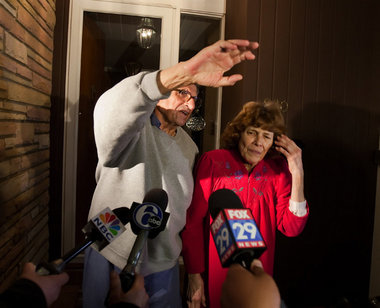
His firing last night was hard to watch for folks who idolized him. But, it was well deserved. "I should have done more" was one of the final things he said as he spoke to Penn State students from his front yard. That sentiment might have sounded sincere if he had expressed it eight or nine years ago, when he first heard about the allegations of child abuse concerning Jerry Sandusky, his defensive coordinator.

But after nearly a decade of sweeping Sandusky's reprehensible behavior under the rug, of letting Sandusky use the Penn State facilities and continue to bring young boys into the team's locker rooms, it sounds like a very hallow lament. Paterno told his bosses. But when they did nothing, he did nothing too. Other children lost their innocence and were needlessly molested because of Paterno's complicity in the shroud of silence and institutional conspiracy. Unfortunately for Paterno, and for all of the people he let down, that will be his legacy.

Graham Spanier, the university's beleaguered president, was also fired last night. Two Penn State administrators under Spanier will soon face criminal charges for not reporting Sandusky's offenses to the district attorney. It is a sad, terrible day to be a Penn State alum.

Those of us who still love the school, and who still hold Coach Paterno close to our hearts, can hope for three things to happen now. First, that the families of the young men who were scarred by Sandusky and by the university's complicity in his immoral actions will be able to help their children heal. Secondly, that justice will be served to men who tried to keep Sandusky's heinous crimes a secret.

Finally, that all of us can come to a clearer understanding of the nature of evil and the necessity to bring it to light as quickly as possible. Joe Paterno's silence helped Sandusky harm other children. That's the unfortunate bottom line in this terrible tragedy.

We now know that silence in the face of evil can never be tolerated. Complicity cannot be pardoned.

Paterno's fall will echo in the forest for decades.

Monday, October 17, 2011

The movement that won't go away


Eight days ago I went up to Washington Square Park in New York city, carrying the sign pictured here, to see for myself what all the Occupy Wall Street protests were about. It was beginning to garner some media attention with predictable results from the print pundits and AM radio shouters.

To the Fox News propagandists, the protesters were castigated as "unwashed hippies and anarchists." On the left-wing blogs and websites they were lauded as "radical revolutionaries." As usual, both takes on the protesters were naive, silly and too frequently based on the biases of the reporter. No one was able to articulate a clear understanding of who was leading the protests or what they wanted.

I have my own biases, of course, but I am growing confident the Occupy Wall Street protest is not going to go away any time soon. It's gaining traction by the day. A particularly harsh winter may slow it down (conservatives like New York's Mayor Bloomberg are crossing their fingers) but my gut tells me by the end of November it will be too big to ignore and it may help shape the public agenda for the 2012 Presidential elections.

And this will likely be bad news for the Republicans. (It was with no small amusement yesterday I read Eric Cantor's weekend remarks that endorsed one of the main sentiments of the OWS protesters: that too much of the nation's wealth was held by the top 1 percent of Americans. For a sycophant of the very wealthy like Cantor -- R. Va. -- to admit such a claim is ground-breaking news....and it suggests the GOP is watching Occupy Wall Street with a growing sense of alarm.)

The signs I saw last Saturday in Washington Square poked fun at both the left and the right. There were plenty of signs attacking Wall Street and lambasting the GOP as the "Party of Greed." But there were also plenty of signs reprimanding the Obama administration for wasting the nation's treasury on foreign wars, for bailing out the banks and for not prosecuting those most responsible for the economic meltdown and the mortgage fiasco.

The protesters I spoke to were upset with the whole political system, with politics as usual. In that sense, they ARE kin to the uber-conservative libertarians who comprise the Tea Party. And like the Tea Party, Occupy Wall Street protesters want transparency in government and an overhaul of the political structure of the nation. They want tangible changes....but not the changes the Tea Party wants: less taxes and smaller government.


What the Occupy Wall Street protesters want is a strengthening of the American middle class. They want the very wealthy to carry the burden of restoring America's economic strength. Most of all, they want jobs. The overwhelming majority of them are Americans who are educated but can't pay off their college loans because there is no work for them.

They blame the two wars that George Bush started and the Bush tax cuts on the very wealthy for the broken American economy. But they blame Bill Clinton's North American Free Trade Agreement on the erosion of thousands of American jobs over the last 15 years. They see the nation's politicians catering to the interests of the monied elite, the same multi-millionaires who subsidize political campaigns and who help keep politicians in office.

They see both parties as corrupt, the entire system in need of a shakedown. And their message is resonating with other disaffected, disgruntled Americans and it is resonating far across the oceans. It is a people's movement and, so far, it has been following the blueprint Mahatma Gandhi used to gain independence for India: non-violent political resistance. Police antagonism only strengthens the will of the people; police brutality will only bring more people to the cause.

Because there are ordinances against the use of bullhorns in New York City, the organizers of Occupy Wall Street have developed a unique way of communicating with the masses at their protests. It's called "the people's mic." When someone wants to say something, he or she will stand on a park bench and shout out half a sentence or a phrase. Then the people in his immediate circle will shout the line back to the speaker. People who cannot hear the speaker can hear the chorus, so the message gets amplified. It is an encouraging template for Democracy in action.

There were all kinds of people in Washington Square last Saturday. The first people I spoke to were a married couple in their late 60s who had flown from the Netherlands to bear witness to the growing movement. The husband had gravitated to me because of my pro-union sign and he suggested the unions needed to throw their weight behind the movement to help give it some direction.

I didn't disagree with him. Mine was about the only pro-union sign in the square. But I am not sure the movement needs the help of organized labor. Labor should support it, but it seems to have a life of its own now that is impervious to parties and platforms. It is a movement about justice.

The people I saw at Washington Square were mostly young and well-educated. They are asking for a chance to make a difference in the world. That would start with jobs. But right now, they have a more important calling: they are seeking economic justice. Their message will not go away until justice happens.

They are not revolutionaries. They are our sons and daughters. They want the same things we all want. They want a chance to live the American dream; a dream that speaks to all humankind.

They are tomorrow's leaders. We should consider ourselves blessed they are finally starting to assert themselves.


To hear more about the people who form the rank and file of Occupy Wall Street, please cut and paste this link into your browser and listen to an ABC interview with Fordham University professor of history Mark Naison.

http://www.youtube.com/watch?v=jrRj83BunNE&feature=related